



mills special test
Exploring the world of wire mills unveils a fascinating intersection of engineering, innovation, and efficiency. Wire mills, also known as wire rod mills, play a fundamental role in manufacturing a broad spectrum of products that impact daily life, from automotive parts to construction reinforcements. As a product-focused article, delving into the intricacies of wire mills provides a detailed perspective on their significance and functionality. Wire mills are industrial facilities equipped to process metal rods into thin, flexible wires. The process begins with large metal ingots or billets, which are heated and passed through a series of rollers to achieve desired thicknesses. These facilities are structured for optimal operation and consistent output, boasting hi-tech machinery designed to enhance precision and durability. The wire mill journey is a showcase of advanced metallurgy . Starting with casting, where molten metal is solidified into billets, the key lies in temperature control. Maintaining precise temperatures ensures that the metal structure maintains strength and malleability. As billets are progressively rolled, sophisticated sensor technologies monitor dimensions and quality, ensuring each millimeter meets stringent standards. Expertise within wire mills is crucial for navigating the complexities of various metals. Each material, whether copper, steel, aluminum, or alloys, requires specific treatments and processes. Knowledgeable metallurgists oversee these procedures, drawing upon their expertise to adjust techniques according to the metal's properties. This bespoke treatment ensures that the final wire product meets or exceeds industry requirements. Authoritativeness in wire mill operations is achieved through compliance with international standards. Mills often adhere to ISO certifications, which guarantee product quality, safety, and efficiency. These certifications provide customers with the confidence that their wire products have been produced under rigorous quality control measures and reflect a commitment to excellence. Trustworthiness in the wire mill sector is fostered through transparency and sustainability initiatives. Many modern mills prioritize eco-friendly processes, minimizing waste and optimizing energy usage. By incorporating recycling strategies, they reduce their environmental impact while conserving natural resources. This commitment to sustainable practices not only bolsters their reputation but also contributes positively to global sustainability goals. Wire mill The technological advancements in wire mills are awe-inspiring. Automation plays a pivotal role, with robotic systems enhancing precision and minimizing human error. The integration of AI and machine learning in quality control processes ensures that even the slightest deviations are detected and corrected in real-time, significantly enhancing reliability and efficiency. A glimpse into modern wire mills reveals an industry bridging tradition with innovation. Despite the high-tech machinery, skilled craftsmen remain integral to operations. Their hands-on experience and finely tuned instincts guide them in overcoming production challenges and tailoring solutions to meet unique customer specifications. Wire mills are an indispensable component of the global manufacturing ecosystem. The products they yield, from delicate copper wires used in electronics to robust steel wires for infrastructure, underscore their versatility and importance. This diversity ensures a steady demand, validating investments in research and development aimed at optimizing performance and reducing costs. Ultimately, wire mills illustrate an ongoing evolution driven by innovation and expertise. Their capacity to adapt to new technologies, embrace sustainability, and maintain stringent quality standards positions them as leaders in the industrial sector. As they continue to evolve, wire mills will undoubtedly shape the future of manufacturing and serve as a benchmark for excellence within the industry. By focusing on the nuances of product development and emphasizing experience, expertise, authoritativeness, and trustworthiness, this article provides a comprehensive exploration of wire mills. This approach not only enhances SEO but ensures the content remains an authoritative and reliable resource in the digital landscape.

We have successfully executed over 500
projects around the world,
many first-of-their-kind
research projects and products in China, including
We have successfully executed over 500
projects around the world,
many first-of-their-kind
research projects and products in China, including
-
2004
The 1st hydraulic AGC system for hot rolling of ribbon steel
-
2006
The 1st AFC system used for 1450mm skin pass mill
-
2009
The 1st 5-stand tandem line with 2-stand POR & Uncoiler for 650mm ribbon steel
-
2012
The 1st reversing mill for 1380mm strip
-
2016
The 1st soft-rolling system used in skin pass mill
-
2019
The 1st fully automated medium-width tandem cold rolling mill
-
2021
The 1st 5000KN Twin-stand double skin pass mill
-
2022
The 1st coupled pickling line & tandem cold mill with two modes - big roller & small roller
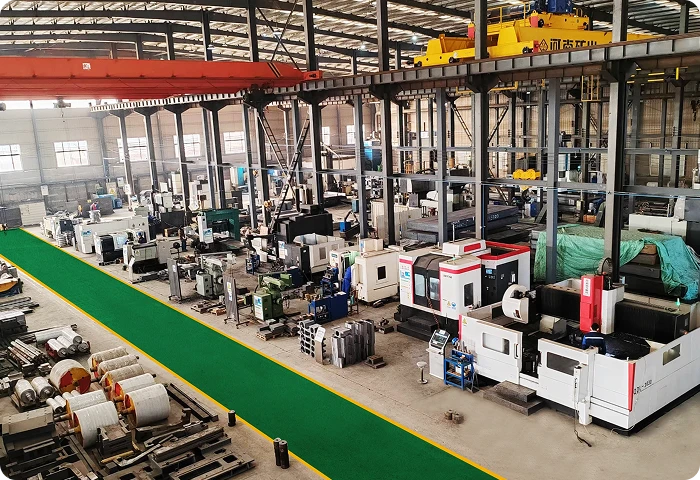
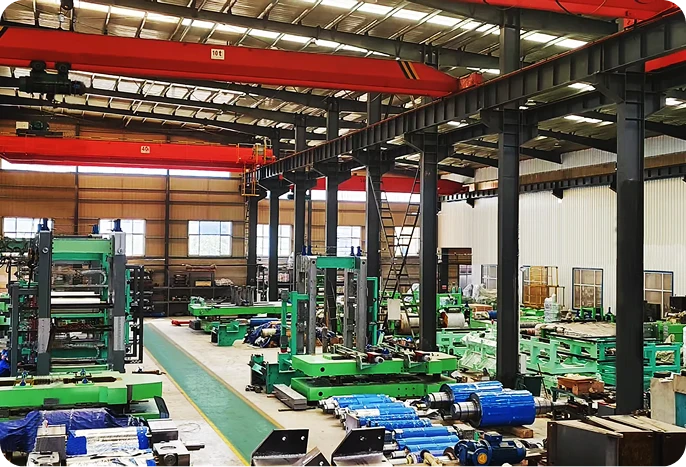
Yang Wang Li Xin operates a state-of-the-art facility over 66,000 square meters,and our manufacturing facility is fully equipped with high-tech machinery and high-capacity cranes. This enables us to handle large work pieces measuring 4.5m in width, 10m in length, and 1.5m in height, guaranteeing our capacity to produce 1800mm skin-pass mills and 1450mm rolling mills. The individual piece can weigh up to 100 tons.


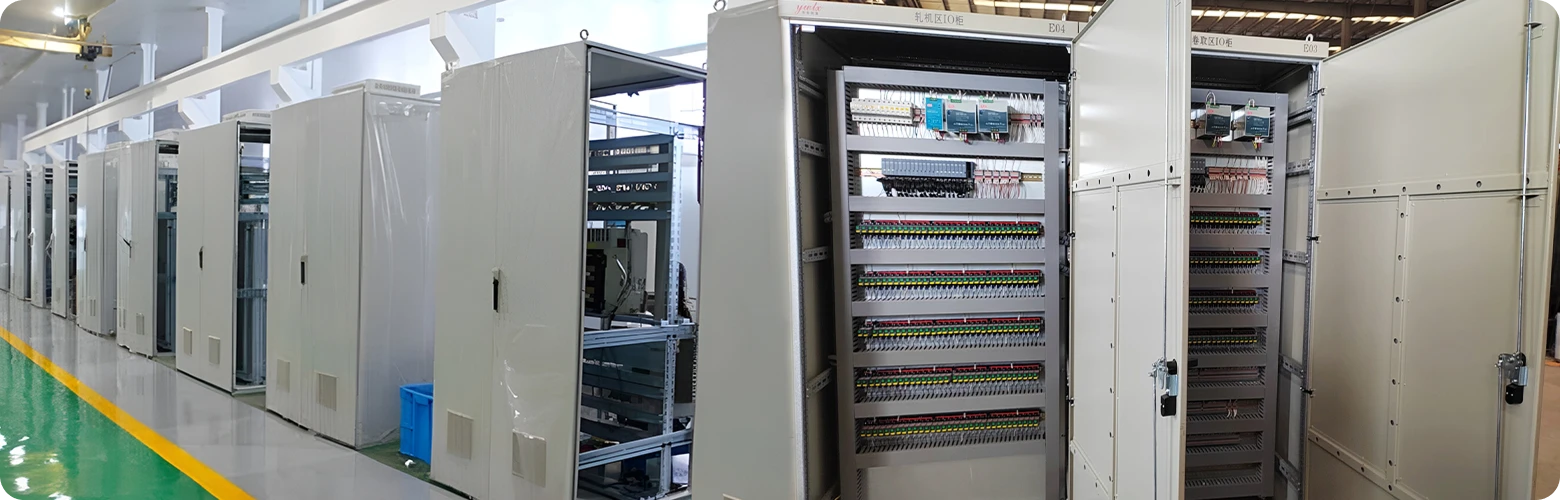
Quality is fundamental to the enterprise survival. We have established a comprehensive and meticulous quality management system and have successfully obtained ISO14000 certification. Starting from the design source, it supervises the entire production cycle, including design, procurement, processing, assembly, in-factory testing, installation, and online commissioning. The workshop is equipped with measuring tools like vernier calipers, spectrometers, hardness testers, and ultrasonic flaw detectors. They are used to check materials and control tolerances to ensure the final equipment meets or exceeds requirements. All products have a unique code, This enables the easy identification and traceability of the equipment components and ensures full control of quality.


-
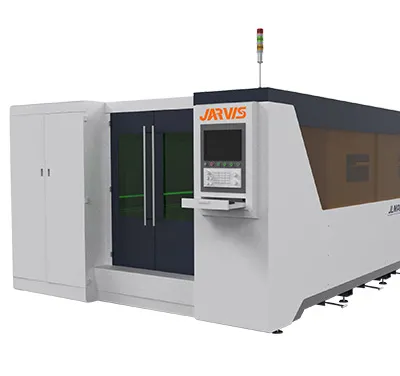 Thickness Control Technology and Accuracy Guarantee in Reversible Cold Rolling MillsThe reversible cold rolling mill is a critical component in modern metal processing, enabling the production of ultra-thin, high-precision steel and aluminum strips with superior surface quality. Unlike traditional tandem mills, a reversing rolling mill processes metal sheets through multiple passes in both forward and reverse directions, allowing for greater flexibility in thickness reduction and
 -
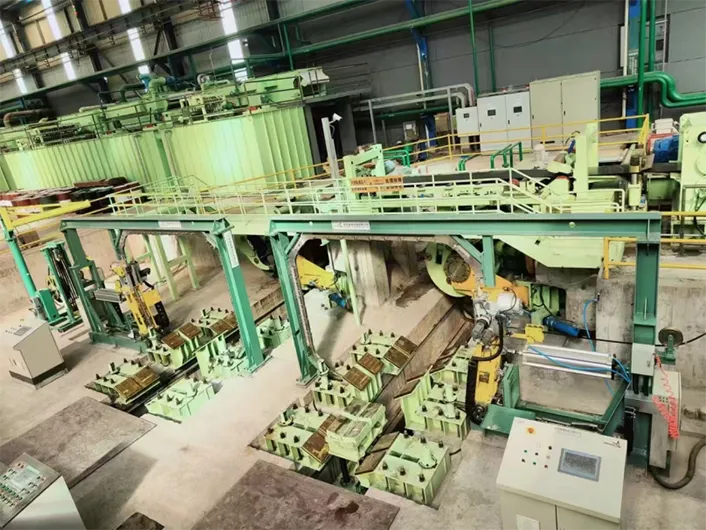 Need a Tandem Cold Mill for Precision, Speed, Efficiency?What’s Really New in Tandem Cold Rolling: Notes from the Shop Floor I’ve been around mills long enough to know hype when I hear it. This tandem cold mill from YWLX in Beijing caught my eye for practical reasons: five stands, double tension reels, a flying shear, and a magnetic conveyor belt—stuff operators actually care about. It’s designed for big reductions with continuous threading, targeting w
 -
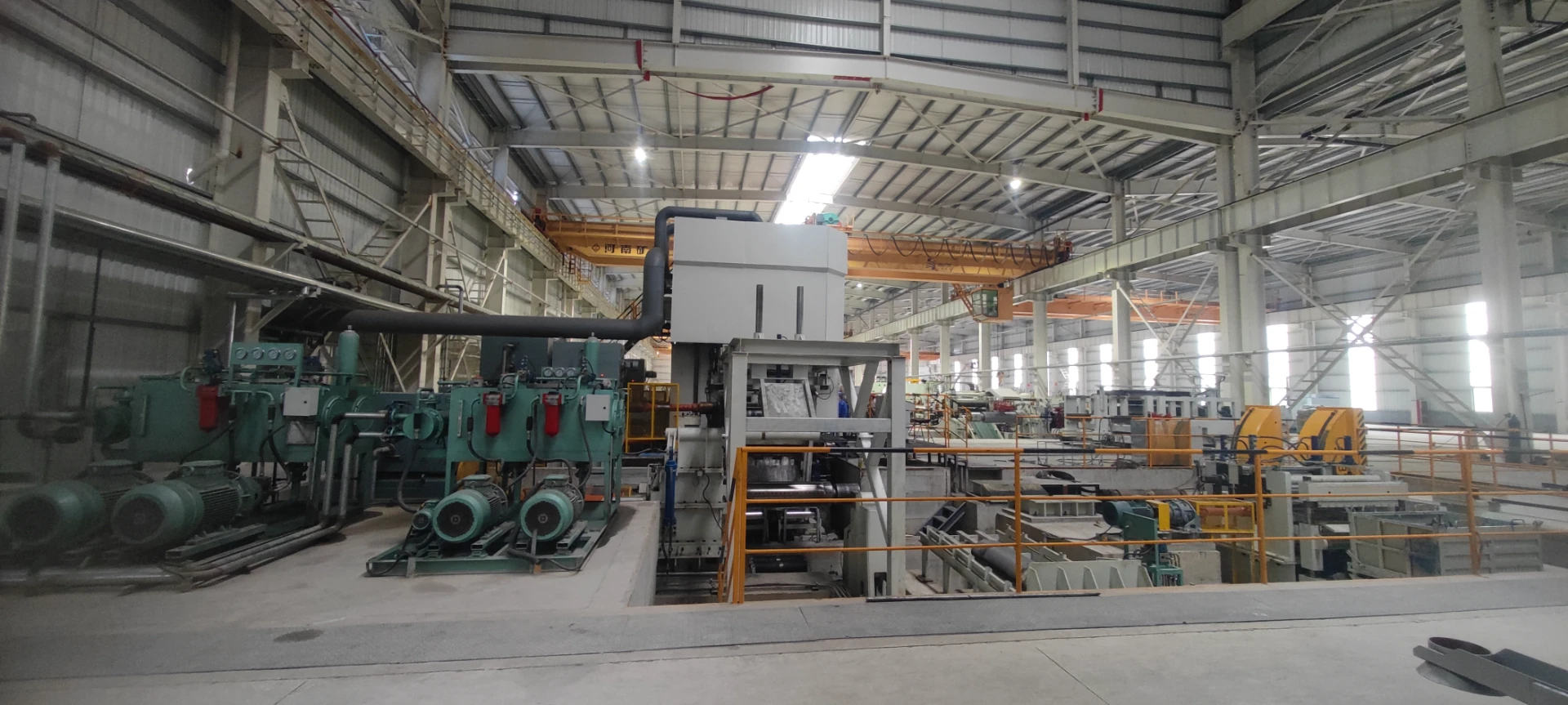 Temper Mill: Key Element in Bright Annealing Line OperationsIn the bustling environment of a rolling factory , the bright annealing line stands as a crucial process for metal refinement. At the heart of this line is the temper mill , also known as the temper pass mill . This specialized equipment plays a pivotal role in the overall success of the bright annealing process. It serves as a vital link between the annealing stage and the subsequent steps in met


